


Now that we’re past Halloween mayhem, and the buzz from all that chocolate and sugar has worn off, we enter a month better suited to contemplation, reflection and remembrance, especially about the things nearest and dearest to us, like nature, and peace, and life in Nova Scotia.
One of the best ways to do that is through the power of poetry, and Truro-area writer Chad Norman addresses these topics and more at Pictou’s Murray Family Public Library, at a reading of his work, including pieces from his latest collection A Life Between the Brackets, on Saturday, Nov. 7 at 2 p.m.
Appropriately, Norman’s life in Nova Scotia began with an act that could have come out of a seminal work from another generation of poets, the beat era’s On the Road by Jack Kerouac. Looking for a change of scenery from his native British Columbia and Vancouver’s political turmoil, he put some place names in a hat, pulled out Debert, Nova Scotia, and hopped on a Greyhound Bus for the East Coast in 2003.
It was a stark change of pace from Vancouver’s vibrant literary scene – “I felt like I had landed on an ice floe all by myself,” says Norman with a laugh – but nothing ventured, nothing gained, so he set about changing the landscape.
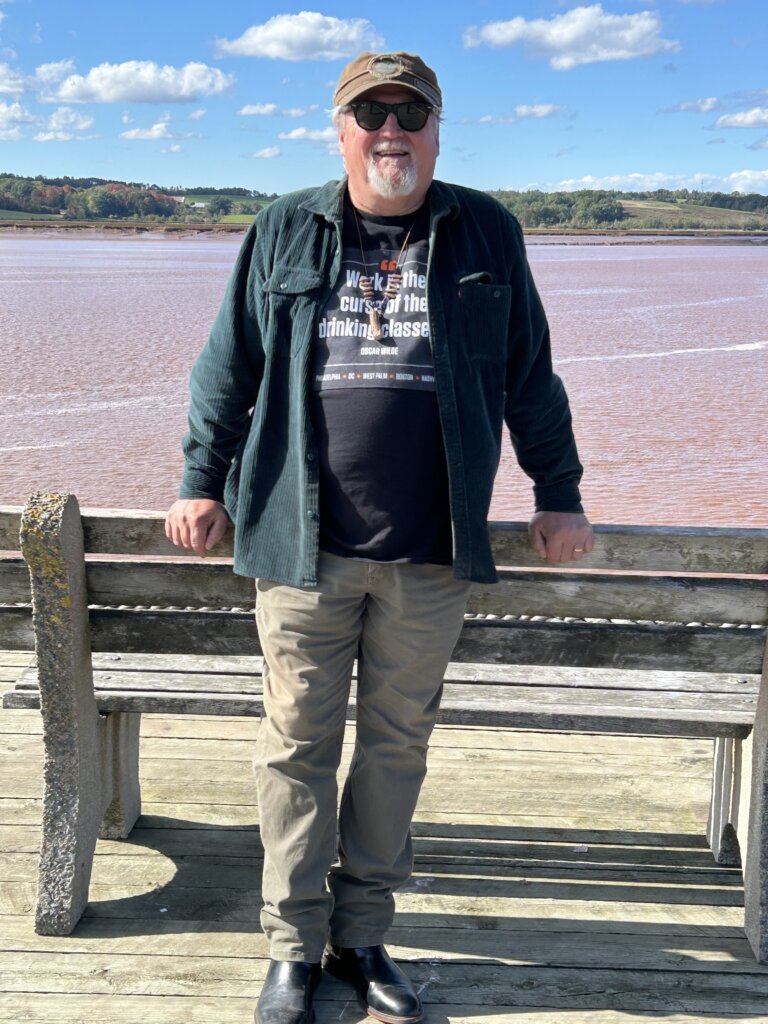
“It’s very different in Truro than in Vancouver,” he says, acknowledging the understatement. “I set up different types of events like Freedom to Read, National Poetry Month events, I had a festival here where I brought poetry and music together. I was at the point where I still had the energy and that person in me – that promotional person that I was in Vancouver – but by about 2010 or so, it wasn’t changing.”
In more recent years, Norman has been channeling his energy into books for children and poetry for adults, like his latest book A Life Between the Brackets, published by Ireland’s ShadowScript Publications. After four decades of writing, his work has appeared in magazines and anthologies across Canada and been translated into nearly a dozen languages, from Albanian to Portuguese to Vietnamese.
The title can be taken any number of different ways, but it was inspired by visits to local cemeteries and examining the artwork and inscriptions on older headstones. Norman pondered how the two years between the brackets, a date of birth and one of death, sums up years of experience and existence that can only be known by a select few.
Living in a quieter area has led Norman to focus more on the immediate world around him, so A Life Between the Brackets includes pieces about our relationship with nature and the perspective of wildlife (including his fascination with, and admiration for, the inscrutable intelligence of crows) but also taking note of the passing of history and the distant rumble of world-changing events like the invasion of Ukraine.
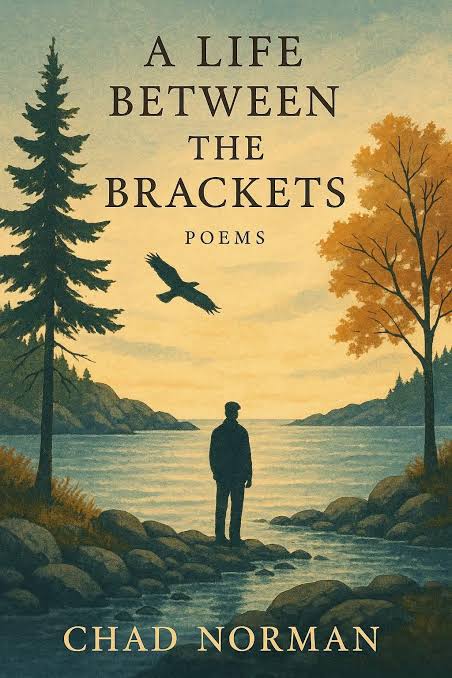
“Most people can relate to my writing about nature, which is great, but I’ve also had some things happen here that are personal, but were certainly newsworthy, so I might tuck in a few of those (poems),” he says, in the midst of planning Saturday’s reading. “The other thing that I do when I close a reading, I usually insert one or maybe two reasonably long newer works. I’ve got a piece that has a lot to do with last summer’s drought and dealing with wildfires, and I think it’s pretty relatable stuff as far as the theme and topics go.”
Norman says he’s now working on a collection centered on themes connected to the nearby Bay of Fundy; from the force of its tides to the wealth of culture and history found along its shores.
It’s a subject that sprang indirectly from his recent exploration of early Canadian poetry, including the work of Atlantic Canadian writers, whose legacy he likes to recognize at public events like this Saturday’s reading in Pictou.
“I’m concentrating on the poets that were at the beginning of it all, going way back into the 1800s, and were born in Nova Scotia,” Norman says. “One poet, John Frederic Herbin, is extremely important as far as I’m concerned because his whole life was dedicated to the Acadians. He’s French himself, but most of his stuff was published at the time in English, so I’ve read from his work, as well as two or three others that were born here in Nova Scotia and may have even died here as well.”

Norman isn’t the only award-winner appearing at the Murray Family Library on Saturday, Nov. 7. Earlier that day, Juno Award-winning Unama’ki fiddler and songwriter Morgan Toney and his long-time collaborator, East Coast Music Award-winning Cape Breton songwriter Keith Mullins present a two-part event titled Mi’kmaq Connections at 10:30 a.m. for a workshop and 11:30 a.m. for a free concert, both for all ages.
The workshop requires advance registration, but together the two events will be a unique opportunity to hear two talented artists discuss their craft and the connections between Mi’kmaq and Celtic cultures, and how those shared ties can result in vivid and life-affirming music today.
For full details on both Chad Norman’s reading and Mi’kmaq Connections with Toney and Mullins, visit the library website’s events page at www.parl.ns.ca.
Toney and Mullins will also perform at this weekend’s Antigonish Jazz Festival, which takes place in multiple venues, and even a couple of street corners, from Thursday, Nov. 5 to Saturday, Nov. 7.
Centre Stage highlighted a rundown of the event a couple of weeks ago, but organizers have done a stellar job of assembling a diverse lineup of Canadian jazz and world beat performers, and you can sample its tempting array of sounds at www.antigonishjazzfest.ca.